

For children in Baltimore’s foster care system, getting to a dentist has never been straightforward. Appointments fall through during placement changes. Providers don’t always accept Medical Assistance. And without consistent care tracking cavities and cleanings, oral health can take a back seat to other pressing issues.
A new partnership between the University of Maryland School of Dentistry (UMSOD) and the Baltimore City Department of Social Services (BCDSS) aims to change that — giving roughly 1,400 foster youth a place they can call a dental home.
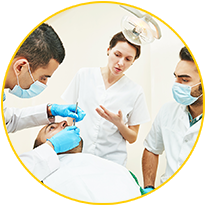
The formal agreement, signed in May 2026, makes UMSOD’s Pediatric Dentistry Clinic the dedicated dental provider for Baltimore City youth in foster care. The clinic will handle everything from routine cleanings and X-rays to management of dental decay, periodontal disease, and traumatic injuries — and it will keep track of each child’s care over time, even as their living situations change.
“The continuity of care is the first thing that breaks for children in foster care,” said Vineet Dhar, BDS, MDS, PhD, clinical professor and chair of the Department of Orthodontics and Pediatric Dentistry, who spearheaded the partnership. “We have very well-regarded faculty, adequate staffing, all the necessary infrastructure — including sedation capacity — to provide comprehensive care and be a dental home that every child deserves. Not just one opportunity to sit in a chair once, but a place that tracks their care over time.”
Protecting Smiles
The oral health challenges facing foster youth go well beyond what most people might realize. According to Dhar, younger children can go for months or years with untreated decay. Older kids and teenagers may deal with gum disease, the effects of tobacco use or substance use, and concerns about how their teeth look as they navigate school and social life.
That last piece matters more than it might seem, Dhar said.
“There’s an immense relationship between a child’s smile and their self-confidence,” he said. “These kids approach their lives with a different level of energy when their smile is good. They participate more in school, in social events. They’re just able to be themselves. Seeing a child smile after treatment, even if they were in pain and couldn’t open their mouth — I have no words to describe that.”
BCDSS director Brandi Stocksdale echoed the point. “This partnership directly addresses the systemic barriers our most vulnerable youth face in accessing basic health care,” she said. “We are making sure foster care youth receive timely, high-quality dental services essential for their overall health and self-confidence.”
A Dental Home
If a child in foster care breaks a tooth, develops an abscess, or is in serious dental pain, they won’t need to navigate a referral process first. The pediatric clinic accepts walk-in urgent cases during operating hours, with an on-call resident available every day. After hours, UMSOD pediatric dentistry faculty staff the pediatric emergency room around the clock.
The real magic happens when it comes to consistent care, something children in foster care often lack. For regular checkups and preventive care, BCDSS staff will work directly with the clinic’s program coordinator to schedule appointments, with dedicated time reserved specifically for program patients each month.
The clinic will also provide oral health guidance through the different stages of childhood and adolescence — counseling about diet, habits, and oral hygiene that’s tailored to where each child is developmentally. If a child needs a specialist, whether for braces or a root canal, the clinic will facilitate the referral, and BCDSS has agreed to cover costs that fall outside what Medical Assistance pays.
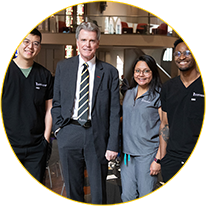
BCDSS is funding a part-time faculty member as site director and a staff liaison who will serve as the connective tissue between the social services system and the dental clinic — handling scheduling, paperwork, and coordination for medical records. Shari Kohn, DDS, clinical instructor, and Erica Caffrey, DDS, clinical assistant professor and director of the pediatric clinic, will oversee clinical operations, supported by the full clinical faculty and residents on the floor.
Beyond direct patient care, the program also provides meaningful clinical training opportunities for dental students and residents, who under the supervision of experienced faculty, will get experience caring for children whose lives involve real barriers to health.
Caffrey said learning to care for vulnerable communities is critical for pediatric dentistry trainees and will follow them into their careers.
"No matter where they practice after graduation," she said, "I hope our students see this program as a tremendous opportunity to grow as compassionate providers and child health advocates. It’s truly a gift to all of us."
A History of Care
Founded in 1840 as the world’s first dental college, UMSOD has built an established record of care for pediatric populations facing barriers to health care, including grant-funded programs for uninsured children and a collaboration with Kennedy Krieger Institute serving children with special health care needs.
Mark A. Reynolds, DDS, PhD, MA, dean and professor said UMSOD is proud to partner with BCDSS to support Baltimore City’s foster youth. “Our facility is fully equipped, and by working directly with BCDSS, we can deliver prompt routine, urgent, and emergency dental services, leveraging our capacity and expertise to serve this critical public health need.”
The program is expected to be up and running this summer.